Escaping Earth
With Thin-Film Propulsion

We intend to utilize commercial diode arrays and a stratospheric launch platform to drive specially desgined sails to escape velocity at a fraction of the traditional cost.

Mission Phases

Phase 1: Pad

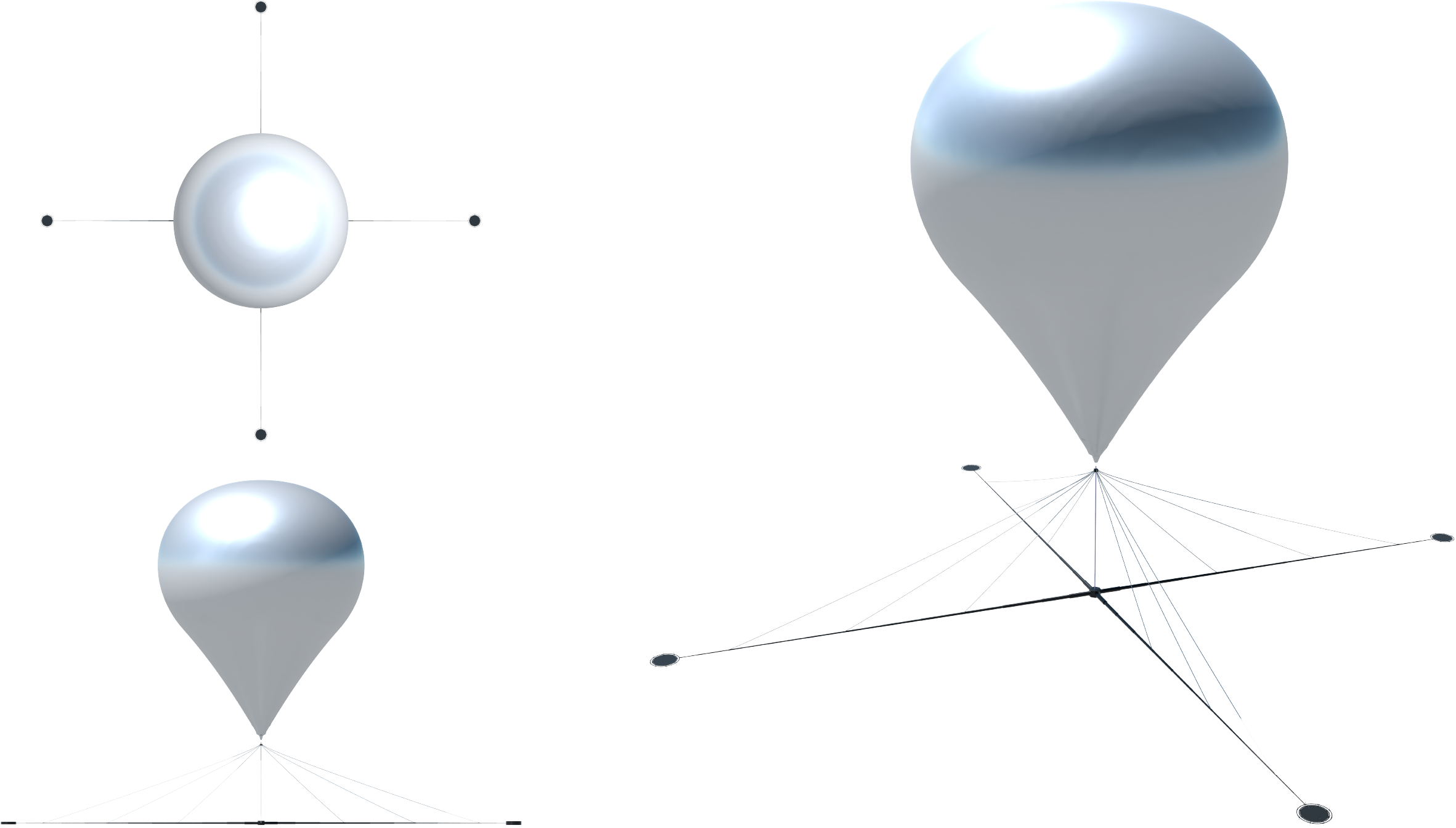
A zero-pressure high-altitude balloon lifts the payload from a mobile platform.

The payload ascends to 48 km.

At this altitude, the air is near-vacuum. Drag is negligible, and optical turbulence is minimized, allowing for minimal laser transmission losses.

Phase 1 illustration

Phase 2: Tracking

As the balloon moves with the wind, the mobile ground platform moves directly below.

Active wave-cancellation on the platform stabilizes the equipment using high-speed actuators.

The sail deploys from extendable beams on the pad. position for tracking is obtained through onboard signal emitter.

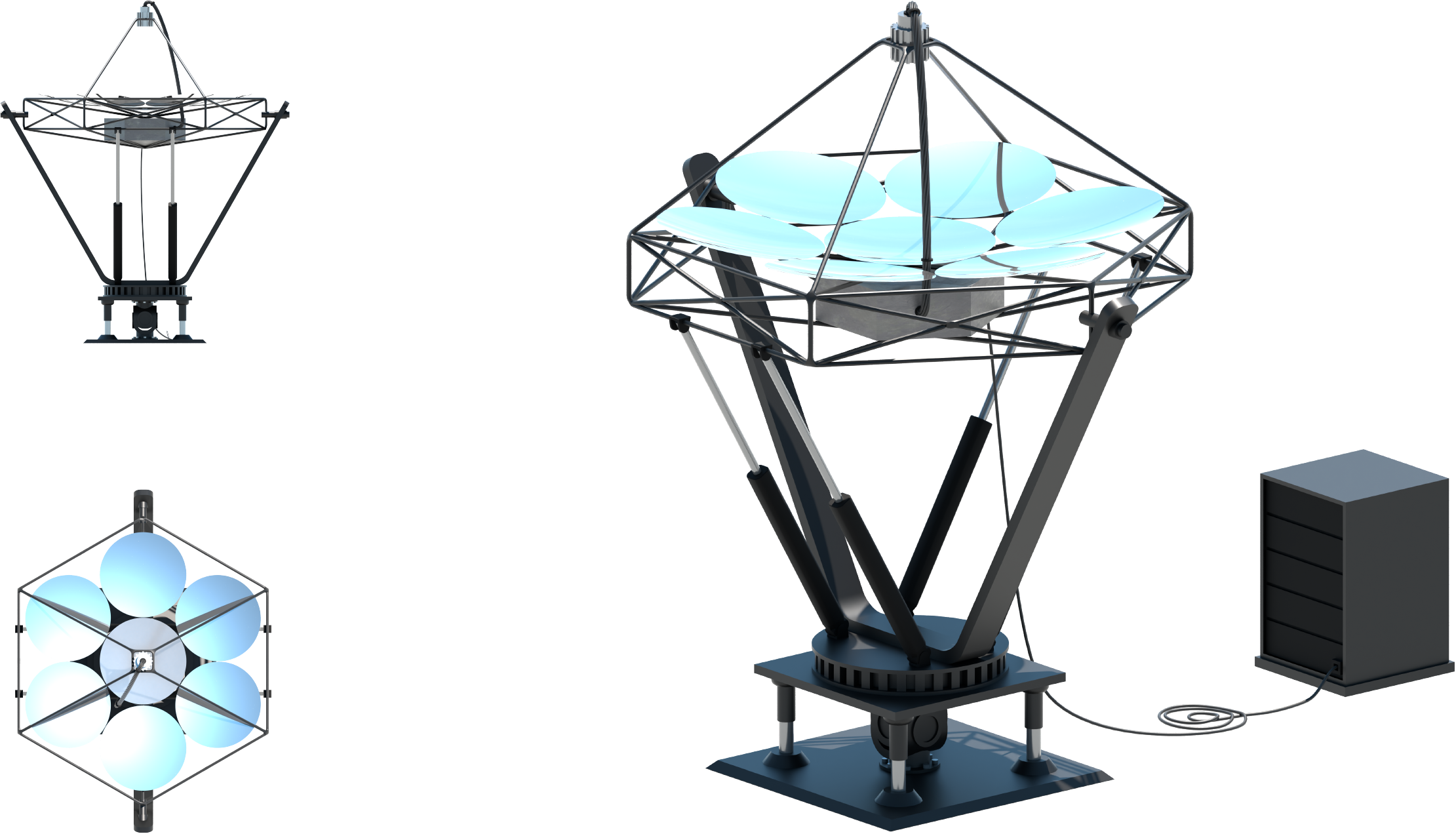
4-meter segmented telescope tracks the signal with sub-millimeter precision.

Phase 2 illustration

Phase 3: Laser

Once alignment is found, the laser is used on one of the onboard sails.

A battery of Diodes are used, providing around kilowatts of optical power through a fused fiber bundle.

The telescope collimates the light to lower divergences.

Phase 3 illustration

Phase 4: Acceleration

The sail accelerates through a privately designed special method.

The sail experiences an initial 15 g of acceleration.

In 20 minutes, the sail achieves a velocity of 10.800 m/s at an altitude of ~ 400 km

Phase 4 illustration

Phase 5: Distance Limitation

Once the sail exceeds the effective range of the beam, the laser system is cut off.

The electrical cost for a 20 minutes launch is low

Phase 5 illustration

Launch Pad

Launch pad

(Not to scale)

Ground Laser Telescope

Ground laser telescope

Flight Profile

The sail escapes the atmosphere fast, preventing acceleration losses by gravity.

COLLABORATE OR CONTACT US

Any form of collaboration is appreciated.

Request has been sent.